
I'll bet others are interested in my answer and maybe have their own unique reasons for changing their art focus and questions or advice on how to do it... so here goes. Warning: this is a long post.
 |
| Early embroidery on pillowcases Jo Reimer, c.1950 |
I learned to sew seven decades ago. Boy, does that make me feel old! My grandmother taught me to embroider and then my mother taught me to sew my own clothing. I kept it up and still sew though I gave up embroidery a few years ago when my fingers went south and I couldn't hold a small needle comfortably.
As an adult I approached embroidery as an art form, not something done on pillowcases but as art to hang on the wall. I studied embroidery in London from some of the finest artists of the day and took dozens of local workshops and eventually taught classes and workshops to other women who were interested in applying the basics of art such as color, design, composition to making art using fabric and thread.
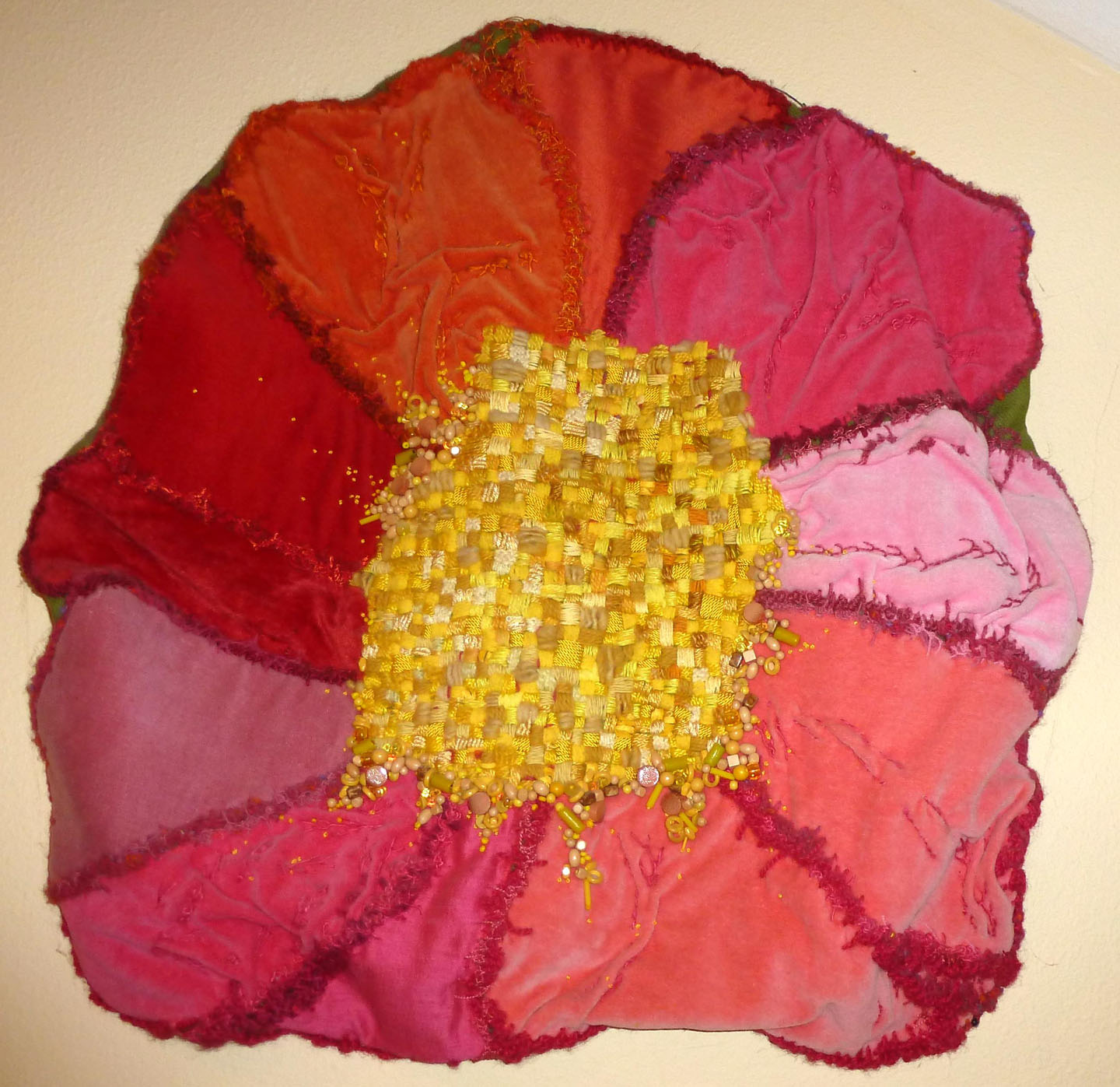 |
| Zinnia Jo Reimer, c. 1980 26" x 26" Mixed Media Embroidery |
I enjoyed piecing fabrics to serve as interesting backgrounds on which to stitch. I worked by hand and machine and gradually rekindled an interest in quilting, and developed skills in surface design on fabric which involved painting, dying, applique, and printing, thinking I'd use these fabrics in quilts. My sewing studio in our new home was featured in Dream Sewing Spaces by Lynette Raney Black, page 12.


Then I realized I had had enough. I sold my pattern company, www.saf-t-pockets.com, packed the quilting fabric and the embroidery thread and the roomful of sewing supplies and stored them out of sight, converting my sewing studio into a paint friendly space. I didn't divorce myself from sewing but viewed it as a trial separation, knowing that this new experiment might not work for me.
I had a growing interest in learning to paint and had even traveled in Greece with a group of painters hoping to learn to paint in watercolor. I needed to know more and decided to develop my own art curriculum by taking classes and workshops that would fill in the gaps in my art knowledge. I wasn't methodical about it but the first step was developing my fledgling drawing skills by enrolling in a couple of terms of drawing classes with a good local teacher. He also taught a beginning painting class and I learned to handle acrylics.
The internet was instrumental in offering support to my art interests. I was an early member of LK Ludwig's artistsjournal group on Yahoo, an early altered books group, and hosted a few online groups of my own - a postcard art exchange and an exchange featuring art and short stories about ancestors. This is how I developed my collage skills, though I had done lots of applique as part of embroidery.
(Applique is collage using fabric and stitching instead of paper and glue.)
 |
| Self Portrait for Ancestor Deck Jo Reimer, 2003 6" x 10" |
My earliest immersion in watercolor was in 1991, I started painting full time in 1998, and I now work with all sorts of water-based media, primarily acrylic. I have made watercolor paintings but I prefer acrylics. I enjoy mixing media, i.e. watercolor + acrylic + pastels + collage + graphite and ink, and like working in layers.
So, my advice to Margaret was this: you don't have to give up your first love of quilting. Simply fold up your fabrics and put them in temporary storage. Put away your sewing machine and notions and clear your workspace for playing with something new. Don't think of it as turning your back on an old friend. It isn't about giving up quilting so much as it is giving yourself time to explore.
Use the things you already have (pencils, paints, paper, scissors, glue, dye...) and start working with what you own, investing only what you can afford in new supplies. Explore the options. This is an experiment. Take an art class, something basic like drawing, or composition, or color mixing. Visit local galleries, explore art on Pinterest, and figure out what sort of art you like. If you identify a local artist or art teacher see if they might welcome you into their studio.
Above all, WORK. Set aside studio hours and spend them working. Don't be self critical. Just do the work. Read about art. Write about art, yours and other's. As a quilter you have so many skills already that will transfer directly to painting. Simply apply what you know to another area of art.
With each new media give yourself enough time to explore. By that I mean set a length of time that you will give yourself to studying that particular media. If it's working with acrylic, for instance, give yourself over to working with acrylic for 3 to 6 months, not just a few days, and not for a lifetime. Set limits and do your best to figure out if this is for you or not.
I've done that with oils. I've taken 3 five-day workshops from good teachers concentrating on oil painting and I've worked at home with oils. I like the media, but my studio is open to the rest of my home (sort of a big loft) and the smell eventually permeated the rest of my home, so I gave up on oil. I gave some away but kept some because I might be in a different situation some day. I've chosen to stick with water-based media and anything that will work with water clean-up.
Please leave your comments or ask questions in the comment section below.
Jo


